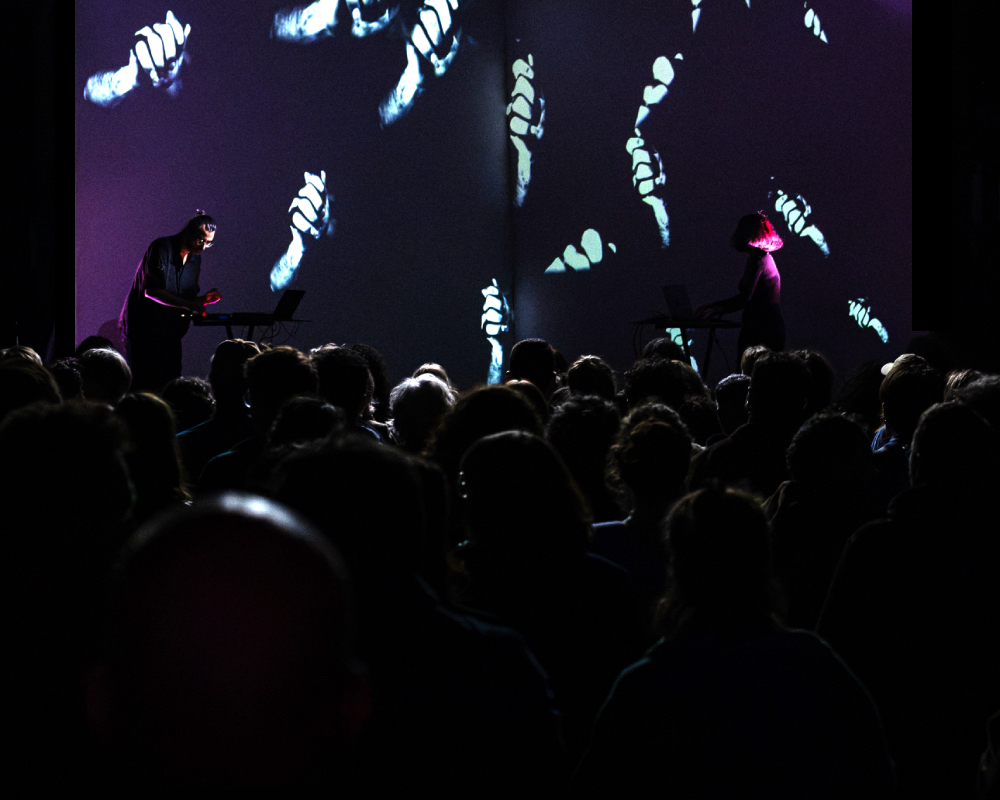
Photo by Mohamad Jeddi
CHAYYEL is a live audiovisual performance that reimagines dabkeh through electronic music and live video.
Rayess Bek and Joan Baz deconstruct dabkeh music and body movements creating a space where sound and image meet through repetition, and hypnotic gestures.
Drawing on sounds recorded in Beirut, Rayess Bek transforms archival and field recordings into new electronic compositions, somewhere between trance, club culture and memory.
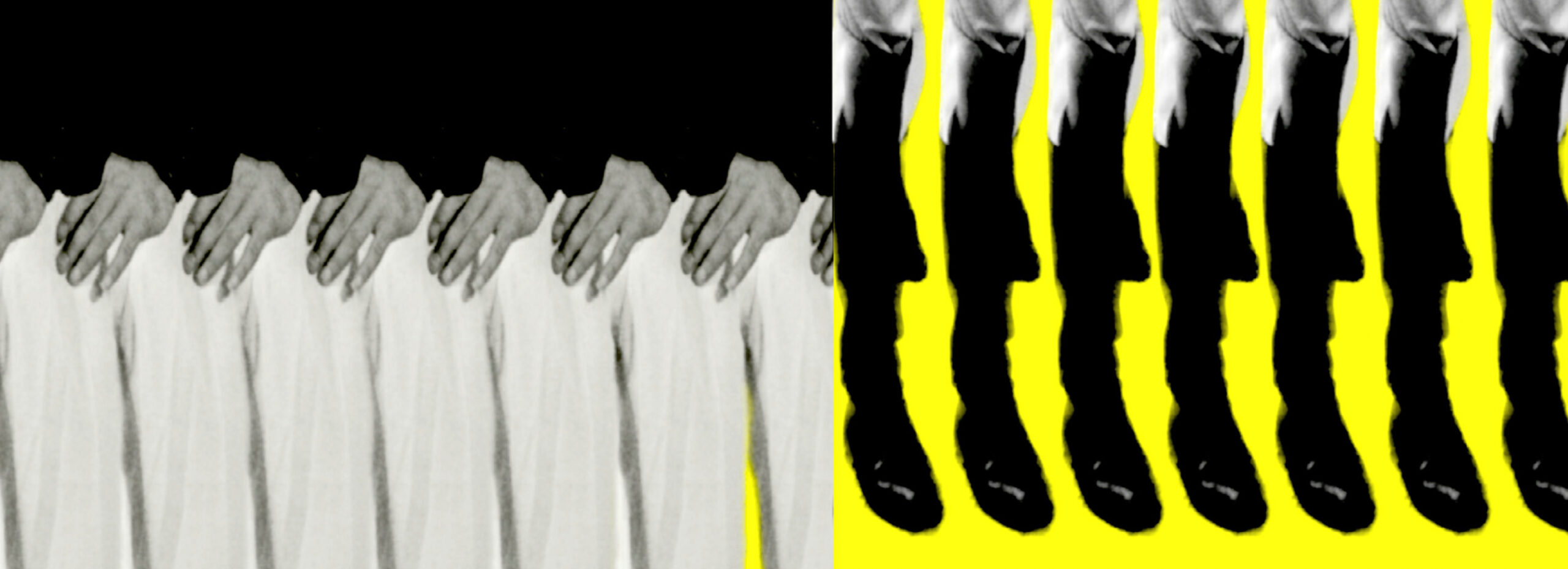
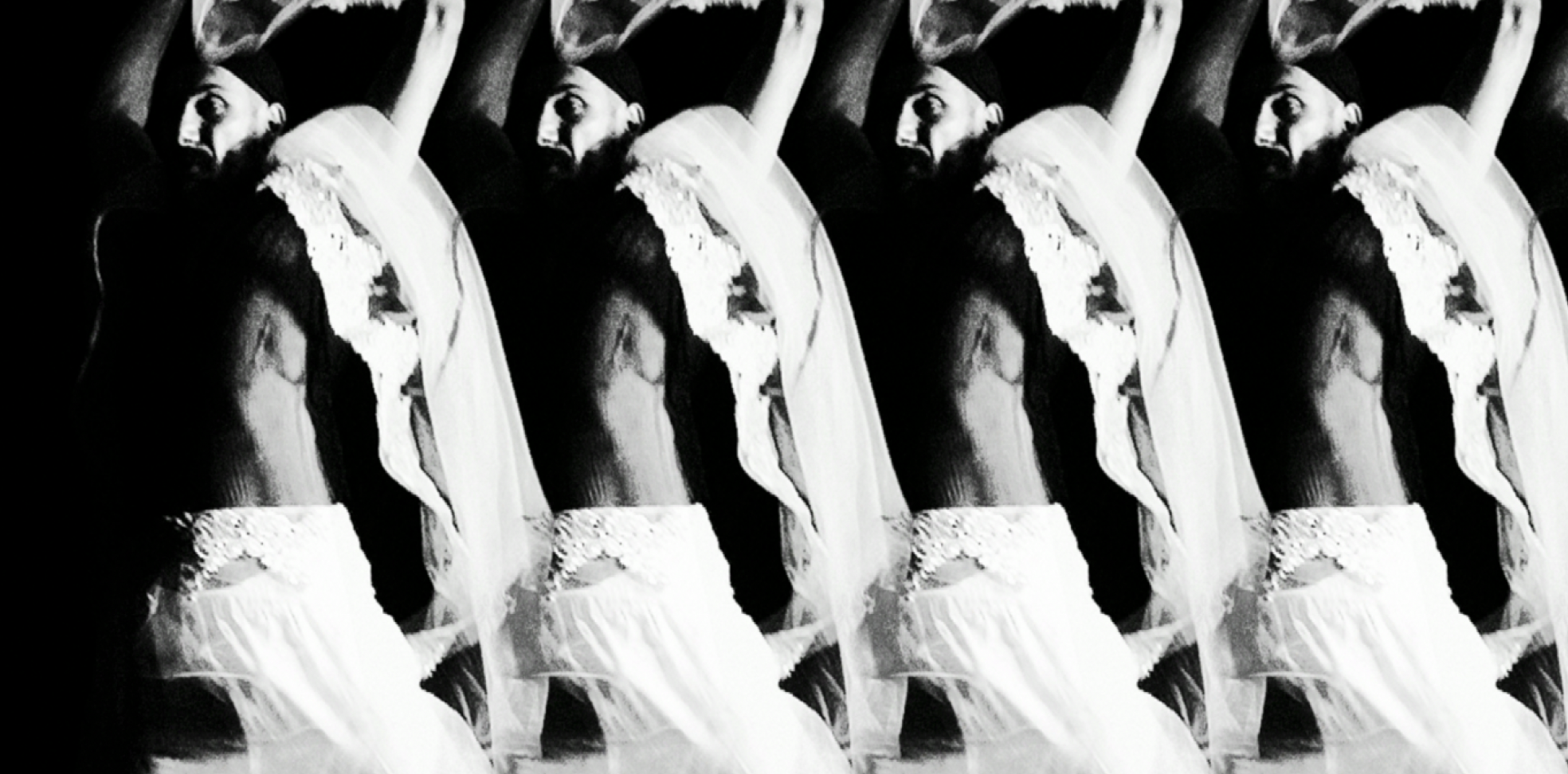
Joan Baz deconstructs dabkeh body movements in real time, manipulating images through repetition, distortion, slowing and superimposition. Bodies become rhythm, gestures become visual pulses.
CHAYYEL creates a space where sound, image and movement merge, bringing the traditional dance of Bilad el-Cham into a contemporary, physical and immersive experience.
In its purest form, dabkeh is inherently graphic.
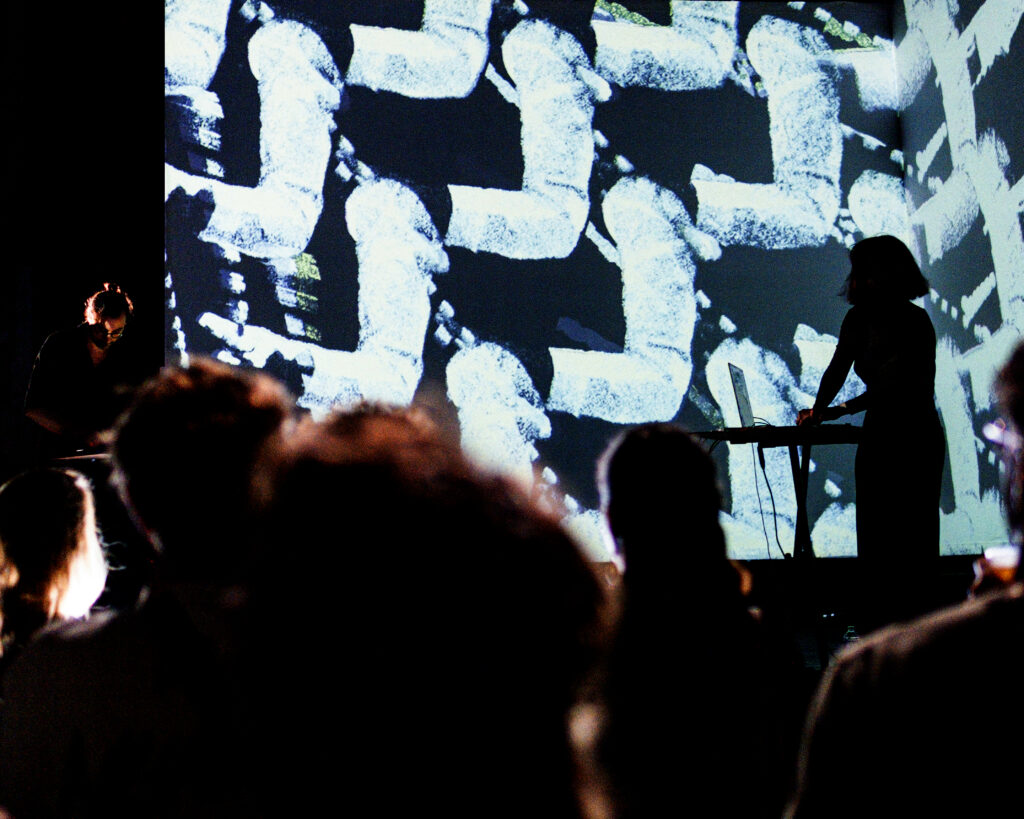
Filmed with dancers in Lebanon and Marseille, CHAYYEL isolates the fundamental movements of dabkeh to reveal their underlying rhythmic geometry. Drawing on her animation and graphic design background, Joan Baz uses a design-led lens to sublime the dance’s inherent graphic nature.
Driven by repetition, dabkeh’s visual language thrives on the tension between the individual and the collective—seen in the contrasting costumes, interlocking hands, and synchronized stomping. Deeply rooted in the social fabric of the Levant, the dance cannot be detached from its cultural context, such as multi-day wedding celebrations.
The video corpus captures the ceremony’s essence by isolating, looping, and extending micro-gestures. This process parallels electronic music production: footage is decomposed into distinct visual layers, where each motif locks onto a specific rhythm. During live manipulation, Baz transforms these physical gestures into graphic compositions, tracing the continuous oscillation between the solo dancer and the shared collective rhythm.
Sonic matter
The sonic foundation of the project originates from a series of intimate studio sessions recorded in Beirut, bringing together traditional singers and instrumentalists from Lebanon, Syria, and Palestine.
These sessions draw on a rich sonic palette of regional instruments such as the mejwiz, mizmar, nay, and percussion like the tabl.
Much like the physical micro-gestures of dabkeh, these acoustic elements are inherently structural, shaped by cyclical patterns and oral traditions.
Producer and composer Rayess Bek approaches these raw vocal and acoustic elements through a parallel process of deconstruction. Just as visual footage is broken down into distinct layers, these acoustic stems are isolated and re-composedd through contemporary electronic production.
Scenography
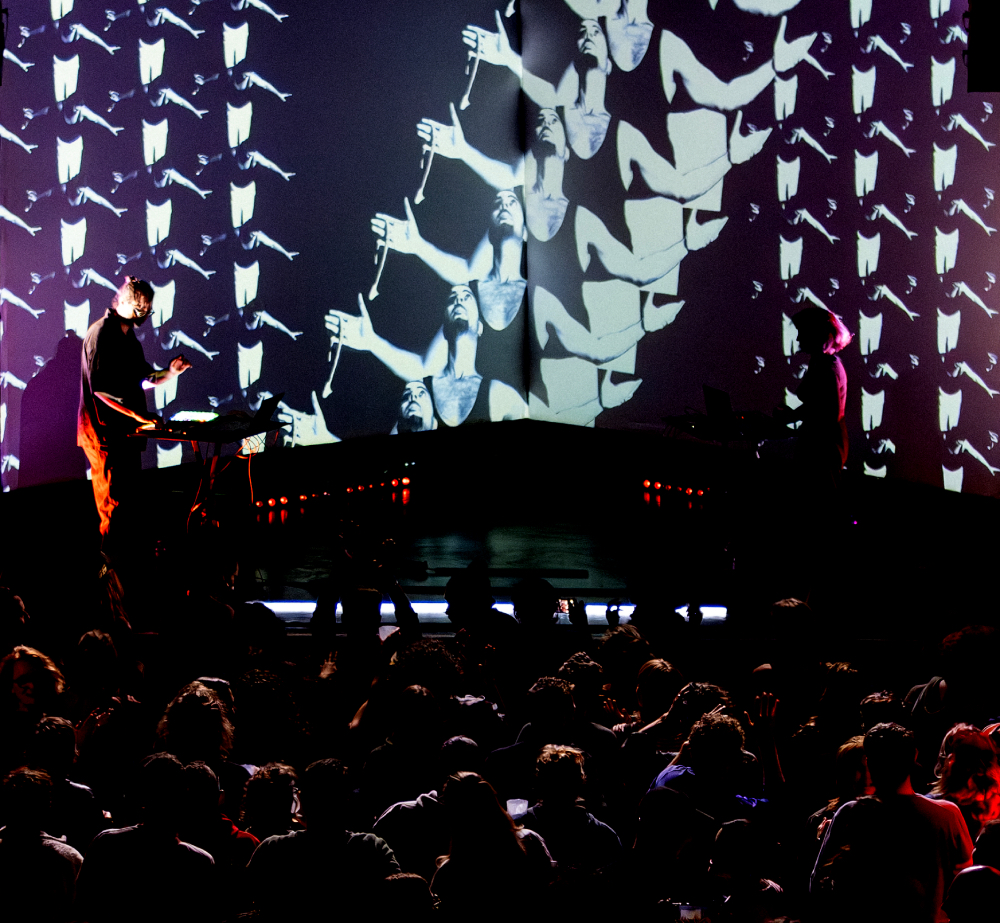
The installation relies on an immersive,a two channel screen setup. Rather than serving as passive backdrops, these screens act as active spatial elements, multiplying and projecting the dancing bodies to envelop the audience.
The two primary performers are positioned centrally on stage facing each other , a layout that anchors the direct, live dialogue between the music performance and the real-time visual manipulation.
Credits:
Wael Koudaih : Music
Joan Baz : Video
Rima Brahim Ben : Light
Production : Cie Rayess Bek
Co-production: Saison Méditerranée, A.M.I – Aide aux musiques innovatrices, Département les Bouches du Rhone, Banlieues Bleues, Mejwiz, Tunefork.
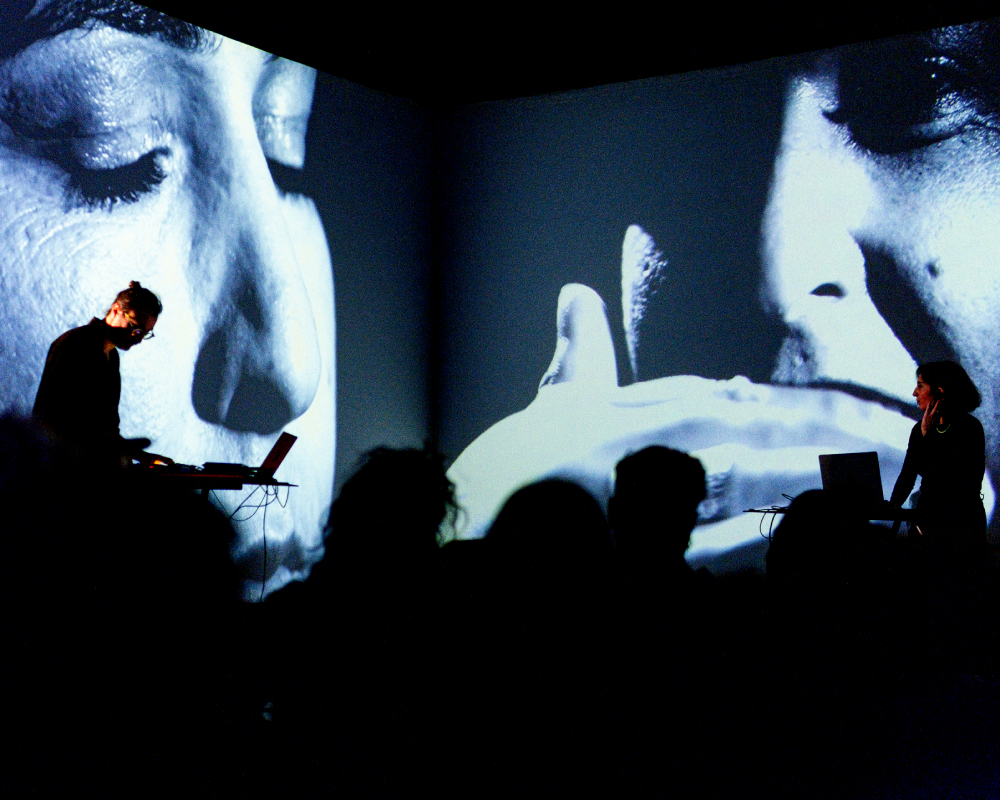
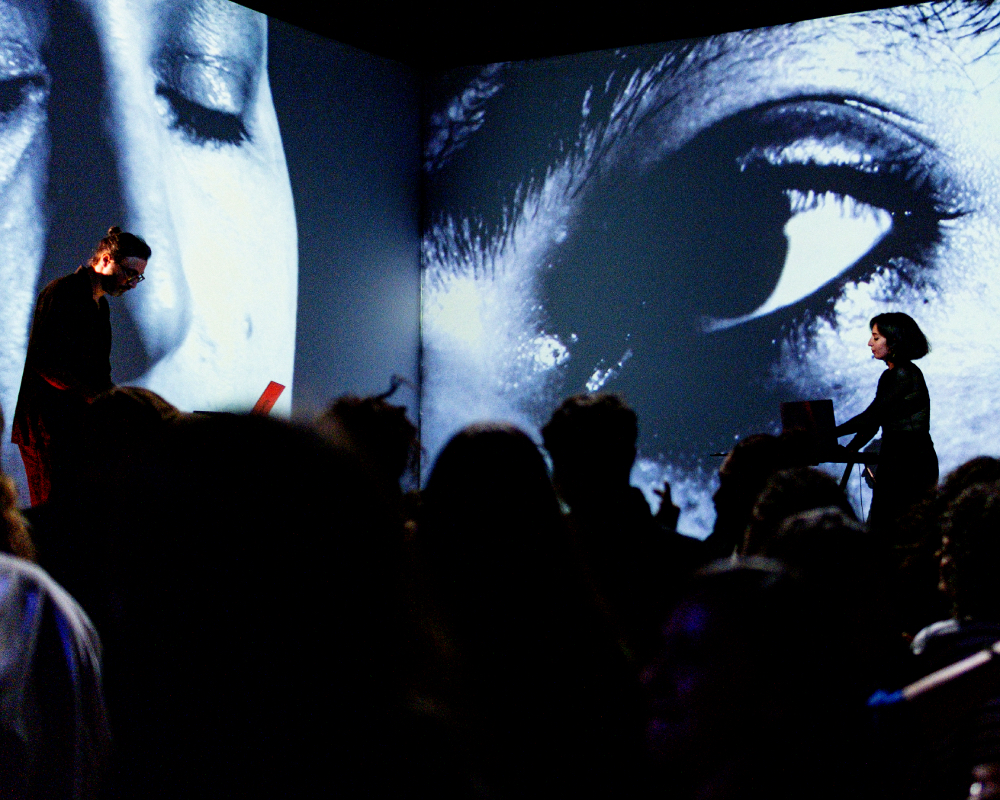
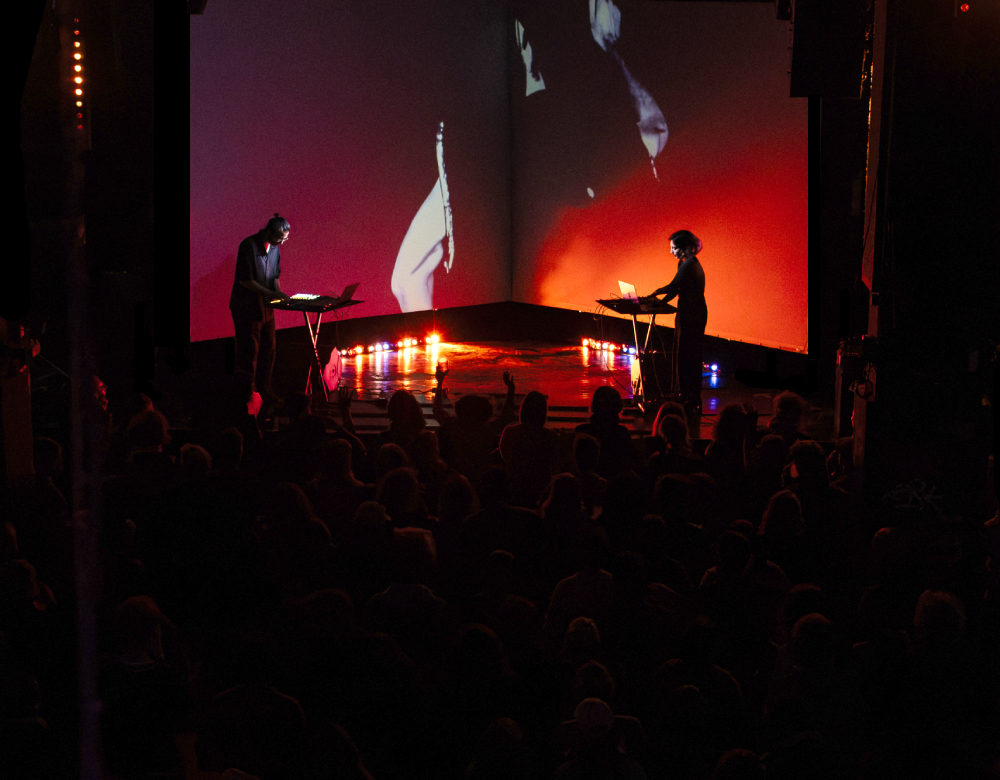
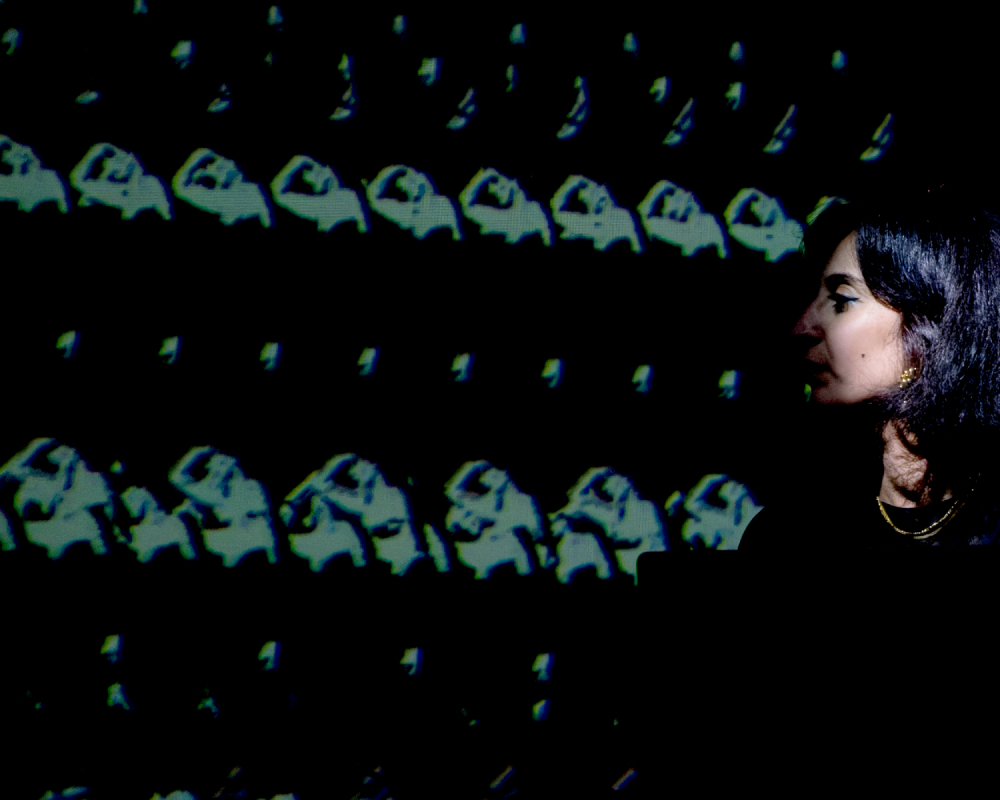
Photo de Mohamad Jeddi